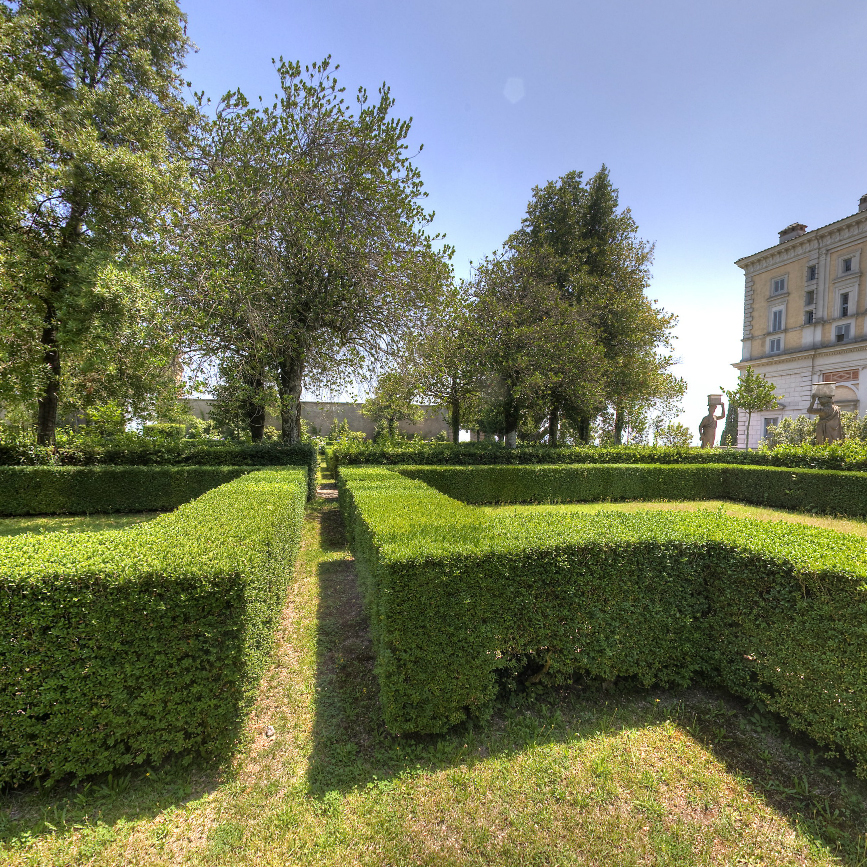



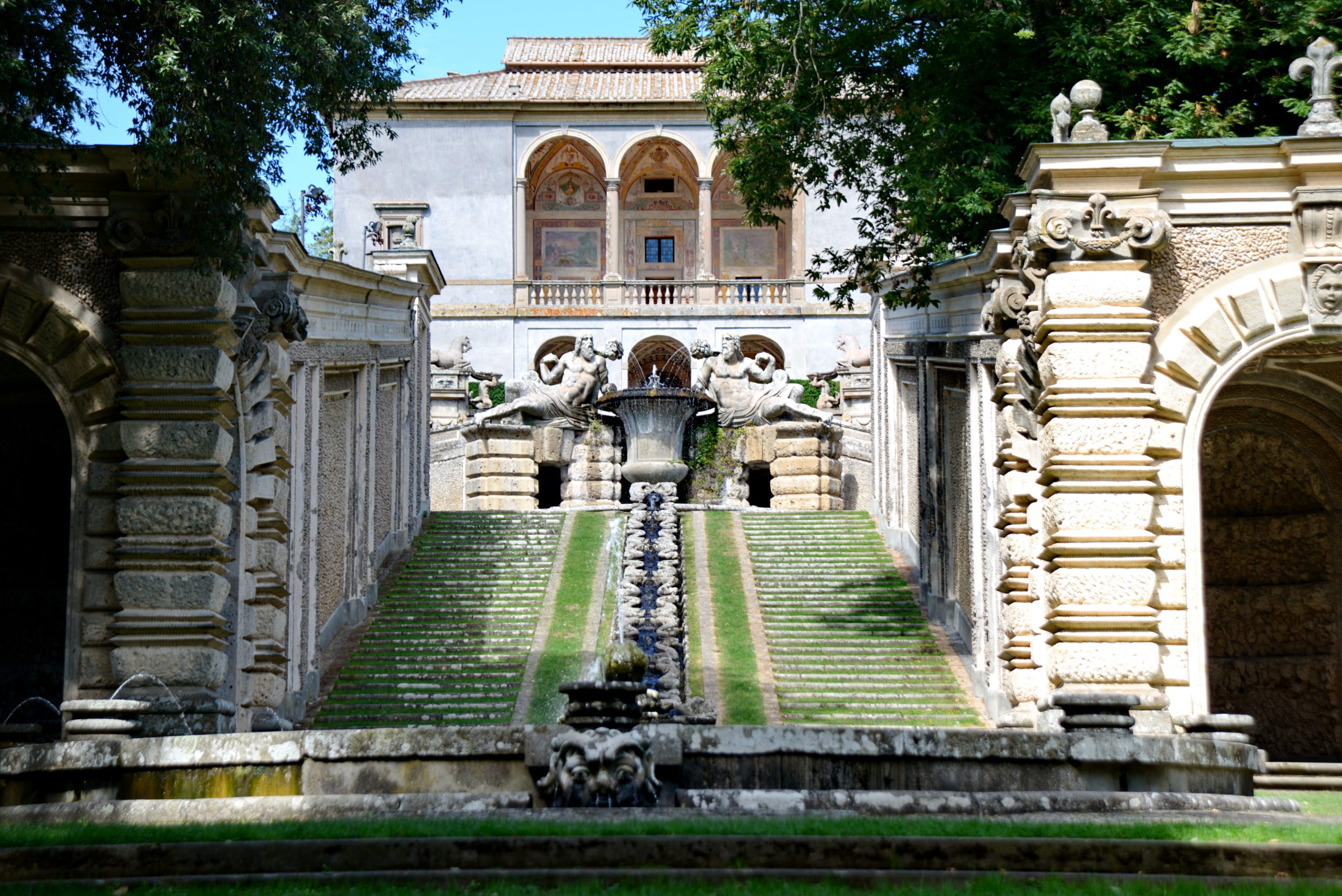
Il cardinale Alessandro decise, intorno al 1579, di aggiungere ai Giardini Bassi un grande parco molto più vasto, diviso in quattro ripiani, dove poter rilassarsi ed intrattenere ancor di più i suoi ospiti. Salendo una serie di scale che partono dai Giardini Bassi e percorrendo dei magnifici viali alberati, si giunge al primo ripiano dove si trova la grande fontana circolare “del Giglio”. Da due padiglioni parte una duplice scala che conduce al secondo ripiano; nel mezzo è posta una Catena di Delfini in peperino nella quale scorre acqua. Su questo ripiano si trova la fontana detta “dei Fiumi”, composta da due giganti che gettano acqua in un grande bicchiere che poi, traboccando, cade per finire in una grande vasca sottostante. Con due scale semicircolari si arriva al terzo ripiano, adibito a giardino, circondato da alte Cariatidi e composto da riquadri di siepi con piccole fontane in peperino. Nel centro sorge la Palazzina, realizzata tra il 1584 e il 1586, il suo progetto viene attribuito al Garzoni. L’elegante edificio si compone di due piani; nel piano terra vi sono cinque camere ed una loggia, mentre nel piano rialzato vi sono quattro stanze con due logge e nello spazio intermedio fra le sale vi è una piccola cappella. Le stanze sono affrescate soltanto nella volta con scene mitologiche e grottesche. Attraverso una doppia scala cordonata, composta da Tritoni in peperino che gettano acqua in piccole vaschette, si accede all’ultimo ripiano. Questo è composto da una vasta platea abbellita con ninfe cavalcanti animali marini e Tritoni che gettano acqua in tazze di peperino. Al centro della piazza si trova un’elegante fontana in marmo con intorno una pavimentazione in mosaico raffigurante gli stemmi dei Farnese. Percorrendo un lungo viale si giunge ad una grande porta chiamata Porta dei Gigli, superata la quale, si accede alla strada che conduce alla Cassia Cimina.