


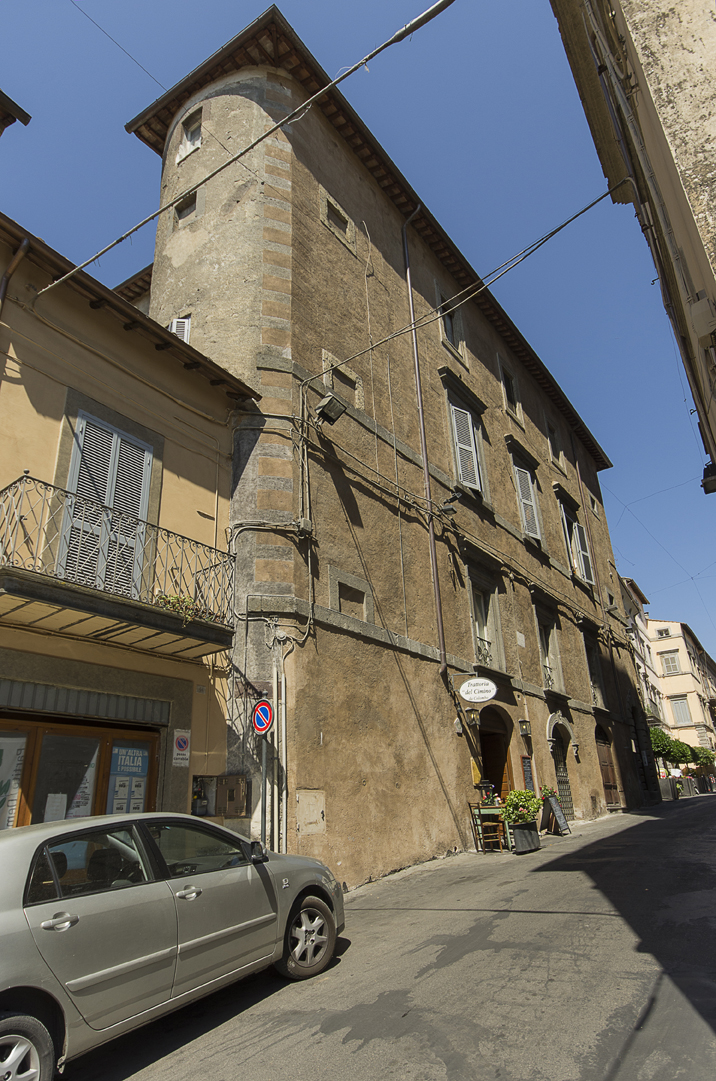
(not available in Chinese) The medieval appearance of Palazzo Riario is due to the fact that it was built as a castle by the Anguillara in 1370. In 1504 it was bought by the Riario family and restored as a mansion. Towards the middle of the sixteenth century, following the construction of the Via Diretta, it underwent further changes. During the nineteenth and twentieth centuries, the Palazzo was converted into private homes. The ancient castle rose up on the rock and was equipped with corner towers, of which two square and one round have been incorporated into the building. It has seven floors, three of which are below the street level of the Via Diretta. The windows of the main floors all have lintels with the inscription “Alessandro Riario, Cardinale e Auditore Apostolico.”. In 1771 the building was damaged when the bell tower of the Church of St. Michael the Archangel collapsed. The façade displays a plaque, which recalls that in 1878 a steam olive oil mill called “The Progress” stood on the site.